EatRight Ontario Print Header

Do you have questions about nutrition and healthy living? Visit us www.ontario.ca/eatright or call us toll-free† at 1-877-510-510-2.

Get answers to your nutrition & healthy eating questions.

Call us toll-free† at 1-877-510-510-2 to speak directly with a Registered Dietitian.

Print this page

Cooking with Kids

Cooking with kids

Try this at home

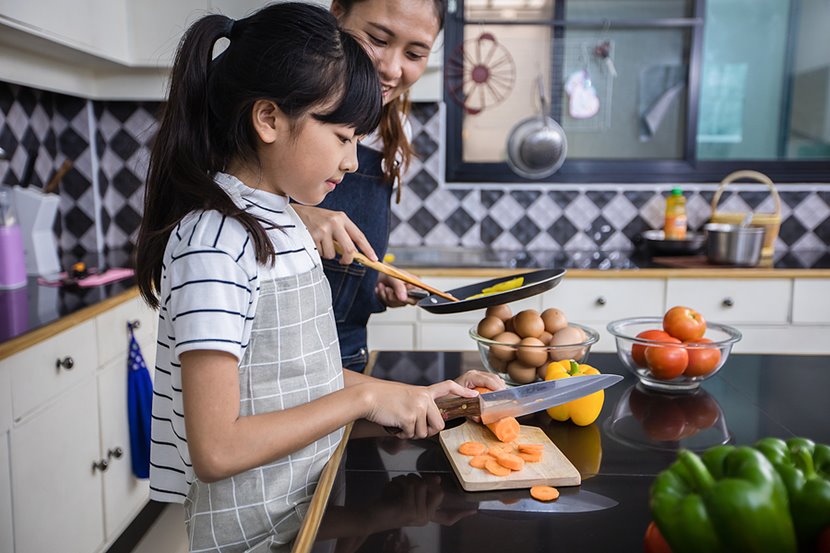
Looking for a great activity that you can do at home with your kids, that doesn't cost a bundle? Try cooking. Cooking with kids doesn't have to be a big production or a lot of work. Whether you have toddlers or teens, and whether you've got five minutes or 50, your kids can cook and they'll love it.

Get them cooking with healthy habits now, and chances are they'll keep up those good habits as they grow older.

We're not just talking cookies, either. Check out all the helpful tips below to make cooking with your kids a big family hit.

Remember you're making more than meals together.

You're making memories together!

  1. Five blockbuster reasons to get cooking with your kids 
  2. Different stages for different ages.
    To make the cooking experience a positive one, be sure to give your child a task they can be successful at. Listed below are some ideas for their stage of development. Just remember, the best way to keep your kids safe is to supervise them closely in the kitchen. Cooking with your:
  3. Secrets to success
  4. 10 "Simply delish" ideas


Five blockbuster reasons to get cooking with your kids

Cooking is educational and fun all at the same time. The little effort it takes to involve younger children in cooking helps to build healthy eating habits and pays off in many other ways, too. There will be the odd spill, and your child will no doubt take longer than you would to grate the cheese, but just look at the upside...

  1. Passing on family traditions. Keep your cultural roots alive by teaching your kids some old family favourites. While cooking, talk about who taught you to cook, what your favourite traditional recipes were, as well as any special significance a certain food has. You may even want to collect recipes from family members as a gift for your child.
  2. Bringing the classroom into the kitchen. You may have a hard time getting your kids to do homework but not cook. And no surprise they'll learn a lot:
    • Health: Learn how to make a healthy meal or snack. Discover new food they love to eat.
    • Language: Read a recipe, write a list of what you need to buy, ask questions, learn new vocabulary, and follow instructions.
    • Math: Count, sort, measure and work with fractions. .
    • Science: Make and test predictions. What will happen when we put this in the oven? .
    • Social studies: Discover where certain food is grown. Find out more about ethnic cuisines from around the world.
    • Small and large muscle control: Stir, chop, knead, pour, and scoop. .
    • Social skills: Work together, take turns, and share utensils. .
  3. Learning that sticks. Hands-on learning is one of the best ways to get information and skills to really sink in. Those math and science concepts start making real-world sense to kids as they apply and experience them through cooking.
  4. Help with picky eaters. The sense of pride that comes with making something might just entice your child to try something new. Even if they don't try their culinary creations, think of cooking as baby steps toward trying a new food later.
  5. Quality time together. Cooking is an easy way to carve out extra time with your kids. On a busy weekday, it's a great way to reconnect after a long day apart. And on the weekend, it's a relaxing way to hang out together.

Different stages for different ages: 2-3 year olds

These little guys love to help in the kitchen and explore though their senses – sight, touch, smell, hearing, tasting. They insist on doing things "myself," so pick something they can do more or less on their own. Keep the tasks limited to about five minutes, in line with their attention span. Try letting your kids:

  • Wash fruits or vegetables in the sink.
  • Add items to dishes (add chopped tofu to a casserole).
  • Smell food, herbs and spices you are using.
  • Help find certain ingredients in the fridge or cupboard.
  • Put paper cups into muffin tins.

Keep in mind, some kids may be happy watching as you cook and talking about what you are doing. An empty pot on the floor with a spoon keeps their hands busy. Be sure to ask lots of questions about what they are making that smells so good!

Different stages for different ages: 3-4 year olds

At this age, children may start to have an improved appetite or may be more interested in talking than eating! Either way, cooking keeps them interested in food. They still like to copy you so they're keen to be in the kitchen. Try letting your kids:

  • Remove eggshells from hard-boiled eggs.
  • Pour from a small pitcher or measuring cup.
  • Help make a simple sandwich or pizza with pre- assembled ingredients.
  • Take a certain number of carrots or bagels out of a bag.
  • Describe the colour, taste and shape of food.
  • Mash sweet potatoes, turnip, carrots or bananas.

Different stages for different ages: 4-6 year olds

This is the age when kids are further developing their fine motor skills that let them do things like print clearly. And cooking can help to develop those skills.

Some kids may also show signs of being a fussy eater or they may already be a full fled fussy eater! While the food they prepare might not make it to their fork, try to be patient knowing cooking is helping them warm up to the idea of trying new foods. Try letting your kids:

  • Assemble foods: make trail mix or make their own yogurt sundae with toppings you've prepared.
  • Stir ingredients together (muffins, pancakes, sauces).
  • Tell you what they know about where a food comes from.
  • Slice soft-cooked vegetables, soft fruit, cheese or tofu with a plastic knife.
  • Set the table.
  • Crack and beat an egg.
  • Cook with a friend for a fun play date.

Different stages for different ages: 6-8 year olds

These kids can follow simple steps for recipes, and are able to share and take turns. Try letting your kids:

  • Use simple kitchen equipment such as a grater, toaster, blender or can opener after you show them how to do so safely.
  • Make simple cold spring rolls or tortilla wraps.
  • Toss salad ingredients together with salad dressing.
  • Invent a fruit salad or smoothie recipe.
  • Tell you what food belongs to what food groups.
  • Borrow kid-friendly cookbooks from the library.
  • Write a list of healthy snacks they like to eat and post on the fridge.
  • Write out the grocery list.
  • Make a simple breakfast: whole grain cereal and canned fruit over yogurt.

Different stages for different ages: 8-11 year olds

Kids at this age are more coordinated and able to understand how to use appliances safely. Try letting your kids:

  • Use a knife with easy-to-cut foods (cooked meats, vegetables and fruits that are easier to grip, cheese, tofu, breads).
  • Use the microwave with your help.
  • Make their own school lunch.
  • Make a fresh veggie or fruit platter to go with dinner.
  • Use the stove, with supervision, to make basic recipes: omelets, pancakes, quesadillas, soups or grilled cheese.
  • Decide what is needed to balance out a meal so it has food from each food group.
  • Consider buying your budding chef their own waffle maker, sandwich grill or cookbook to keep them inspired.


Secrets to success

To make cooking with your kids a positive and fun experience, there are just a few basics to bear in mind. The benefits — everything from improved eating habits and better understanding of math and science, to improved self-image— are well worth the extra care.

  1. Think safety first. Like many places in the house, your kitchen has hazards. Supervise your kids at all times.
  2. Wash up. Teach your kids why, how, and when to wash their hands thoroughly before getting started.
  3. KISS. Keep It Super Simple. Your first goal is for your child to think, " Hey this is fun, let's do it again!" So choose something you're sure will work.. The main thing is for your child to feel successful.
  4. Don't rush. Allow more time than you would need to make a recipe on your own. When you are in a hurry, give your child a specific, manageable task. For example, they could find and wash fruit to make a fruit salad.
  5. Get organized. >Keep your kids interested and engaged by avoiding downtime. Assemble what you'll need and maybe even get a head start on some parts of the recipe before inviting your kids to join you in the kitchen.
  6. Give your child a task. Children learn much more by doing than by watching so let them do as much as they can. If they seem to be struggling, ask if they want any help.
  7. Oops! Keep a damp cloth handy. You have to expect some mess. Here's the best way to handle it: without showing your child you are upset, help them tidy up a mess rather than doing it all for them.
  8. Don't expect your child to eat it. Your kids will be more interested in cooking if they know they won't have to try everything they make. At least they are more familiar with that food now than before they helped cook it!
  9. Create a kid-friendly kitchen: Can your kitchen be organized so that children can work more independently (with your supervision)? Perhaps you need a good sturdy stool, a kid-sized pitcher or a drawer just for them with their lunch bag, re-useable containers, a plastic bowl, plate and cutlery.

    10 "Simply delish" ideas

    1. ABC123 pancakes

    Fruit Sauce

    Stretch your maple syrup with this easy-to-make fruity pancake topping. Mix 3/4 cup frozen berries (raspberries and or blueberries) with 1/3 cup maple syrup. By the time the pancakes are on the table, the fruit should be defrosted. You can also warm it up in the microwave.

    Pancakes

    If you use regular pancake mix, sneak in some whole grain. Eating Well with Canada's Food Guide recommends at least half of our grain products be whole grain. Try mixing half multi-grain pancake mix (sold at bulk food stores) with your regular mix. You could also add 3-4 tablespoons (45-60mL) of quick cooking oats per cup of pancake mix. Two tablespoons (30 mL) of oat bran or wheat bran would do as well. You may need to add a little more milk to maintain the right consistency.

    Now spoon the mix into a squirt bottle (it's not that much work—an empty, rinsed mustard or ketchup bottle will do fine). Make pancake letters, numbers, even shapes.

    Tip: Make and freeze extra for a quick breakfast or snack.

    For younger children: Talk about where the berries and maple syrup in the fruit sauce come from.

    For older children: Talk about how maple syrup is made. You may be able to get a book about this at your library. Ask your child to tell you the food groups for each ingredient in the recipe.

    2. Invent a smoothie

    Kids can get creative inventing a smoothie as unique as they are! Remember, frozen fruits are just as nutritious as fresh, without the washing, peeling or cutting. Canned fruits packed in their own juices or with their light syrup drained off are good choices as well.

    Blend:

    • 2 cups (500 mL) milk or fortified soy milk
    • 2 cups (500 mL) fruit (any of: sliced banana, mango, nectarine, frozen
      raspberries, blueberries or strawberries, canned pineapple or peaches),
    • 1 cup (250 mL) ice cubes
    • 3/4 cup (175 mL) plain lower fat (2% M.F. or less) yogurt
    • 1/2 cup (125 mL) frozen orange juice concentrate

    Makes 4 servings.

    Optional ingredients: 1 tbsp (15 mL) chocolate syrup, peanut butter, sweetened shredded coconut or honey, or 1 tsp (5 mL) orange zest or vanilla extract.

    Tip: Freeze any extra in Popsicle moulds.

    For younger children: Let them peel bananas, wash fruit, add ingredients to the blender, and create a wacky name for their smoothie.

    For older children: Suggest they write out their recipes on cards, giving each a star rating based on a family taste test.

    3. Cinnamon tortilla chips with fruity salsa

    Try this for a healthy dessert or snack everyone can share.

    Cut whole wheat tortillas into wedges. Brush with very little water. Sprinkle with brown sugar and cinnamon. Place on microwave safe plate lined with paper towel and microwave on High 1 minute 30 seconds or until crisp.

    Prepare a fruity salsa for dipping by dicing whatever fruits you have on hand, or use prepared applesauce.

    For younger children: They can select and wash the fruit, and later add the diced fruit into a small bowl and mix. Ask your children where the fruits come from–trees, bushes, vines, or plants?

    For older children: With your supervision, they can cut the tortilla bread into wedges, as well as making the salsa.

    Tip: A pizza cutter works great for cutting the tortilla (pitas too) into wedges.

    4. Surprise muffins

    Prepare your favourite whole grain muffin recipe. Invite your children to write a message or draw pictures on small pieces of paper (6cm x 4cm) with a ball point pen. Roll these tightly and insert half way into each muffin before putting the muffins into the oven. Everybody will love finding their surprise message before eating their muffin.

    For younger children: Get them creating the secret messages while you assemble the ingredients to make the muffins.

    For older children: Give your child the recipe. Offer to be their helper. Ask them what part they want to do and what part they would like you to do.

    5. Hot diggity egg dog

    Hot dogs are a big favourite for most kids but can be higher in fat and salt. Try this healthier version.

    Make a rolled up omelet (or scramble eggs by microwaving in a cup) and place in a whole wheat hot dog bun. Grate some cheese over the top. Offer mild salsa as an optional topping.

    For younger children: Ask your child where eggs come from.

    For older children: With your supervision they can follow this recipe themselves. Ask if they know how eggs can help our bodies grow and stay healthy (eggs are high in protein, needed to make muscle, hair, skin and bones).

    6. Fish Delish

    Eating Well with Canada's Food Guide recommends we have two servings of fish* a week. But not all kids like fish. The recipe below may change their minds.

    * Find out how to limit your exposure to mercury from certain fish.

    Mix 1 cup mashed sweet potato, one beaten egg, 125 mL (½ cup) bread crumbs, 1 tsp (5ml) dill and a can of salmon (drained with skin removed and bones mashed). Scoop out a tablespoon of mixture and roll into a ball shape then flatten slightly. Repeat with remaining mixture. Pan fry the salmon cakes over medium heat for 2-3 minutes on each side. Serve with your kids' favourite dipping sauce.

    For younger children: Young children can help right up until the cooking part and will especially enjoy mashing the potatoes.

    For older children: With your supervision, they can make the entire recipe. Ask them what you should eat with fish to make this a complete meal. (The fish is a meat and alternative food group. For a complete meal you could add fortified soy milk or milk (milk and alternatives), baby carrots and green pepper rings (vegetables and fruit), and whole grain whole wheat pita wedges (grain products).

    7. Anytime ice cream

    Whether it's a hot summer day or a long winter afternoon, what kid would turn down the chance to make ice cream? This one is made with milk so it's low fat.

    1. Half fill a large bag with ice from 2-3 ice cube trays and mix in 1/4 cup (75 mL) salt.
    2. Fill a small sealable bag with ½ cup (125 mL) chocolate milk.
    3. Place the milk bag into the ice bag and carefully seal.
    4. Protect your hands by using oven mittens or winter gloves and shake the bag for 5-6 minutes.
    5. Ice cream! Enjoy.

    For younger children: Ask them to predict what will happen when you shake the bag. Ask them to watch and describe what they see as the milk turns into ice cream.

    For older children: Ask them to measure, record and compare the temperature of the ice at step 1 and after step 4. Ask what happened to the temperature and why. (The salt lowers the freezing point of the ice – making it even colder).

    8. Cheesy chili buns

    Eating Well with Canada's Food Guide recommends we eat beans, lentils and tofu more often. Chili is a tasty way to introduce beans to kids—just as long as you keep the chili spice mild.

    Cut off the top 1/4 of a whole wheat bun and scoop out some bread. Fill with chili and top with grated cheese. Broil and enjoy!

    For younger children: Use small dinner rolls instead of a regular size bun. Invite the children to try a plain canned or cooked kidney bean. Let them sprinkle the cheese over top of the chili.

    For older children: With supervision while they cut the bread and use the stove, older children may be able to make this entire recipe.

    9. Peanut butter fruit sandwich

    This is one of those ideas that's so simple we sometimes forget about it. No recipe needed! On your favourite whole grain whole wheat bread, slap some peanut butter—or even almond butter, for a yummy change. Top with sliced or mashed bananas, or get creative with sliced apples, pears or strawberries.

    For younger children: These sandwiches are great for a pretend picnic indoors when it's too cold or rainy to have a picnic outside. Try using raisin bread or even banana bread for a treat. Ask your kids if they want square or triangular sandwiches.

    For older children: Buy some almond butter and challenge your child to see whether they can smell the difference between it and peanut butter with their eyes closed.

    Tip: If you want to take these sandwiches to a public place where some children might have nut allergies, try using pea butter instead– it's nut free, but looks and tastes like peanut butter.

    10. Salad in a bag

    Put an assortment of salad ingredients into several bowls: torn romaine leaves, sliced carrots, peppers, cucumber, celery, broccoli and cauliflower florets, shredded cabbage (green, red or Nappa cabbage, also known as Chinese Cabbage), grape or cherry tomatoes, etc. Let your children select a variety of their favourite veggies and place them in a zipper-closed medium size bag. Serve with lower fat salad dressing. When ready to eat, the child pours the dressing into the bag, zippers it closed and shakes.

    For younger children: Ask what their favourite vegetables are, and why. Then tell them your own favourites.

    For older children: Ask if they know which vegetables are produced locally in Ontario and which are not.

    Tip: To make this portable, pack the dressing in a leak-proof container. Great for school lunches, road trips or to pack on a picnic.

    Glossary

    Fat
    Description:
    Is one of the nutrients, along with protein and carbohydrate, that supplies energy (calories) to the body. Dietary fats include saturated (animal flesh, butter, margarine, processed and fried foods), trans (hydrogenated oils) and unsaturated (vegetable oils). Unsaturated fats are the preferred type for health reasons.
    Sugars
    Description:
    A group of carbohydrates that help make our food sweet. Glucose, fructose, sucrose and lactose are some examples. The different names indicate that each sugar has a different chemical structure.

    Provided by the Ministry of Health Promotion.

    Ontario

    © Queen's Printer for Ontario, 2010